


November 13, 2026 newsletter from Rawlson King, City Councillor for Rideau-Rockcliffe.
November 7, 2025 newsletter from Rawlson King, City Councillor for Rideau-Rockcliffe.
A Message from Councillor King
Your Councillor in the Community

I was very pleased to have made introductory remarks as Chair of the Built Heritage Committee at the 2025 Ottawa Heritage and Urban Design Award Ceremony at City Hall this week.

It was a pleasure to sponsor the opening of an art exhibition by An Nguyen at Ben Franklin Place this week as Council Liaison for Anti-Racism and Ethnocultural Relations Initiatives, commemorating Project 4000, the effort which resettled thousands of Vietnamese to Ottawa in 1979.

Enjoyed the annual Ottawa Aboriginal Coalition Community Gathering with Council colleagues this week in Overbrook celebrating the many contributions of Indigenous social service organizations in our city.

This week the City of Ottawa unveiled a commemorative street name in honour of the late Elsa Lessard, which will be located in Wateridge Village. Elsa served in the Women’s Royal Canadian Naval Service during WWII and worked to intercept German naval signals during WWII that changed the course of the war.

Great to join Barrhaven West Councillor David Hill at a fundraiser for Veteran’s House, a supportive housing development located in Wateridge Village, in honour of Veterans Week.

I had a great time touring Fire Station 51 on Montreal Road last weekend and took the opportunity to thank our first responders for keeping our communities safe!

As a proud Canadian of Vincentian descent it was a privilege to provide remarks at the Vincent and the Grenadines Association of Ottawa’s 46th Annual Independence Gala last weekend.

Wonderful to join His Excellency Ahmed Hafez, Egyptian Ambassador to Canada, at the inauguration ceremony of the Grand Egyptian Museum last weekend at the ambassador’s residence in Rockcliffe Park.

It was a pleasure to open the annual bazaar at the Church of St. Bartholomew in New Edinburgh last weekend with Ottawa-Vanier MPP Lucille Collard and Canon Catherine Ascah.

It was great dropping in to check out the haunted house and other family fun activities on Halloween night at the Overbrook Community Centre. Centre staff and their partners, the Rideau-Rockcliffe Community Resource Centre and Ottawa Community Housing, welcomed more than 1,100 attendees, including more than 700 brave visitors to their haunted house.
Rideau-Rockcliffe News, Events and Engagement Opportunities
Fall & Winter Operations

Update - St. Laurent Complex Rehabilitation Project

Roof replacement work is underway at the Don Gamble Community Centre / St. Laurent Complex, with roof demolition currently in progress. The project includes full roof rehabilitation, accessibility upgrades to changerooms and the reception area, new fixtures and lockers, updated chiller and ventilation systems, new main entrance doors, and refreshed lobby flooring. Due to the complexity of the roof work, the construction timeline has been extended, affecting pool use during the Winter session. The work is projected to be completed by March 2026. The City is working with the contractor to identify ways to expedite the schedule. To ensure continued access to aquatic programs, additional sessions are being added at the nearby Splash Wave Pool., 2040 Ogilvie Road, with more than 600 new registration spots available when Winter registration opens this month.
Rockcliffe Park Public School Book Fair - Nov. 7 to 9

Every fall, the Rockcliffe Park Public School gym transforms into a massive pop-up bookstore. This isn’t magic, but rather a phenomenal effort on the part of our school community and many valued volunteers from the wider community. Throughout the year, donation drives, collection nights, sorting parties and finally the all-hands-on-deck sale setup result in three days of fabulous deals on gently used books for readers of all ages – and tasty food at the Book Fair Café! This year's Book Fair takes place from Nov. 7, from 10 am to 9 pm, Nov. 8, from 10 am to 6 pm, and Nov. 9, from 10 am to 4 pm, in Queen Julianna Hall, 360 Springfield Road.
Hurricane Melissa Relief Drive - every Saturday until Dec. 6

The African, Caribbean & Black (ACB) Wellness Resource Centre is once again calling on our community to come together in support of families in need. In light of the devastation caused by Hurricane Melissa, we have launched the Jamaica Relief Drive to collect essential goods and financial support for those most affected. We invite you to join us in this compassionate effort by:

-
Donating essential items such as non-perishable food, hygiene products, and clothing;
-
Sponsoring shipment or transportation costs; or
-
Spreading the word within your networks.
Donations will be accepted every Saturday from November 1 to December 6 (12:00–2:00 PM) at the ACB Wellness Centre, 610 Donald Street. Monetary donations can be sent via Interac e-transfer to [email protected] (please note “Hurricane Melissa” in the message). If you or someone you know would like to help but aren’t sure where to start, come visit us at the ACB Wellness Centre, and we’ll guide you on how you can make a difference for Jamaica.
Ottawa Family Cinema presents Aladdin - Nov. 8
Ottawa Family Cinema presents Aladdin on the big screen on Nov. 8 at 2 pm at The Rideau Community Hub, 815 St. Laurent Boulevard. Tickets on sale now at familycinema.ca.
Free WalkSafe Presentations Delivered to Elementary Schools by the Ottawa Safety Council

With school zones busier than ever during pick-up and drop-off times, it’s essential to help students stay safe around traffic. The WalkSafe program, offered free of charge by the City of Ottawa and the Ottawa Safety Council, helps students learn how to stay safe around traffic, school buses, and large vehicles — before tragedy strikes. Recent incidents in our community have shown how quickly a moment can change everything. WalkSafe gives students the tools and awareness they need to make safer choices every day — walking to school, riding the bus, or crossing busy streets.
Each session is age-appropriate, engaging, and tailored for:
- JK/SK, Grades 1–2, Grades 3–4, and Grades 5–6
- Available in English & French
The Council's trained safety educators come directly to your school — no cost, no hassle — delivering interactive lessons that meet curriculum goals and save lives. Book your free WalkSafe presentation today. Dates fill quickly.
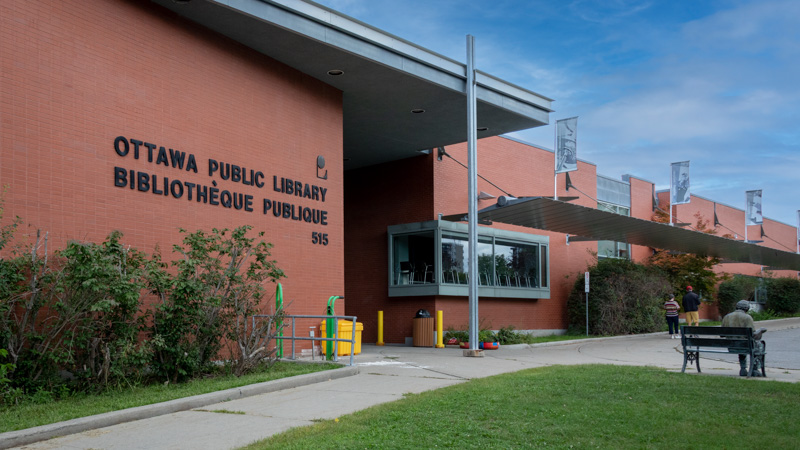
Ottawa Public Library programming at the St. Laurent Branch
-
Quick PC Tips – Boost your computer’s performance and discover free tools with Chris Taylor from the Ottawa PC Users’ Group. (Nov. 10 at 6 PM)
-
Family S.T.E.M. Fair – A hands-on event for kids (ages 4–12) and parents to explore, create, and experiment. (Nov. 22 at 3 PM)
Visit St-Laurent branch (515 Côté) to see what’s happening near you.
For details, visit the branch website for the programming list and for hours of operation, to access online resources, browse books, search programs and events and more!Additional OPL Programs:
Financial Literacy Month
November is Financial Literacy Month, and OPL is here to help residents of all ages make informed financial decisions. Through free workshops and resources, participants can learn practical skills for budgeting, saving, managing credit, and planning for the future
Local library programming:
Remembrance Day in and around Ward 13 - Nov. 11

-
National Military Cemetery's Annual Remembrance Day Service at Beechwood Cemetery
-
10:45 am - Military members of the National Capital Region and their families and friends are invited to observe the Remembrance Day Ceremony at the National Military Cemetery of the Canadian Forces. We welcome all who want to show your support for the Canadian Armed Forces. Details: beechwoodottawa.ca
-
-
Eastview Legion Branch 462 Remembrance Day parade
- 2 to 4 pm (Parade begins at approximately 1:30 pm) - To mark Remembrance Day, the Eastview Branch 462 of the Royal Canadian Legion is hosting their annual parade from the Legion hall at 294 Cyr Avenue to the Vanier Cenotaph at Hannah and Dagmar for a wreath-laying ceremony. The event takes place Nov. 11 from 1:30 to 3 pm, with the ceremony beginning at the Cenotaph at 2 pm. Everyone welcome. Following the event, the Eastview Branch is hosting a celebration featuring a light lunch and entertainment, followed by an evening dance from 5 to 8 pm. For more details, please visit www.rcl462.ca/entertainment.html or on Facebook at www.facebook.com/eastview.legion.5.
Free Winter Clothing Pop-Up Shop - Nov. 15
Clothing donations welcome by Nov. 12


St. Columba Anglican Church is hosting a free winter clothing pop-up shop. Need winter clothing? Everyone is welcome to shop for free. The event takes place Nov. 15, from 10 am to 1:30 pm at the St. Columba Anglican Church Hall, 24 Sandridge Road in the Manor Park community. The hall is on OC Transpo Bus Route #7.
Winter clothing donations welcome: Have clothing to donate? Donations of clean, gently used winter clothing are welcome, including boots, coats, hats, mitts, gloves, pants, shirts, skirts and sweaters for the whole family. Items can be dropped off on the porch of St. Columba Church. Donated items welcome until Nov. 12. For details, please call 613-749-5103 or email [email protected].
Outdoor rink volunteers urgently needed for Presland Park in Overbrook

Volunteers are urgently needed to maintain the Presland Park outdoor rink in Overbrook this coming winter. One person is needed to lead the puddle rink maintenance, however, several people are welcome to help maintain the ice. Prior experience is not required. City staff provide a training session, manual and videos from previous years. Staff provide guidance on rink maintenance operations. Those interested are invited to connect with City staff by emailing [email protected] or calling 613-580-2590.
Rideau-Rockcliffe 2026 Budget Consultation - Nov. 17

Rideau-Rockcliffe residents are invited to join Councillor Rawlson King for a virtual presentation and discussion on the City's 2026 Draft Budget. The event takes place Nov. 17, from 6:30 to 8 pm on Zoom. To register to receive the meeting link, please visit this link.
Beechwood Night Market at MacKay Memorial Hall - Nov. 15


Experience the best of local food, craft beer and wine at the Beechwood Night Market @ MacKay! On Nov. 15 from 5 to 8 pm, drop by MacKay Memorial Hall at 39 Dufferin Road in New Edinburgh for an unforgettable evening! Satisfy your taste buds with the best local food, Clocktower craft beer, and wine while supporting local artisans. Enjoy groovy jazz music as you sip your drink at the market. Don't miss out on this lively indoor event!
Holiday Exchange Lending Hand program - registration open until Nov. 20

Need help during the holidays? The Rideau-Rockcliffe Community Resource Centre presents its Holiday Exchange program for community members living in Rideau-Rockcliffe Ward 13. Registration is limited and available on a first-come, first-served basis. Registration closes Nov. 20. To register to receive assistance during the holidays or for more information, please click here. For help filling out the form, you can register in person at 815 St. Laurent Boulevard in Room 126 (Food Bank) on Wednesdays from 1 to 4 pm and Fridays from 9 am to 12 pm, or call 613-745-0073, ext. 120.
FAB Fest - Nov. 22

FAB Festival is a one-day, family-friendly celebration designed to showcase the ingenuity and creativity of our local community. Inspired by the Ottawa Maker Faire, the festival aims to ignite wonder, spark joy, and celebrate the diverse talents within our community. Join the Rideau-Rockcliffe Community Resource Centre and Incubator13 on Nov. 22 from 11 am to 4 pm at the Rideau Community Hub, 815 St. Laurent Blvd. Admission is free. For details and tickets, please visit Eventbrite.
Highlights:
- Exhibitions featuring local makers, artists, and innovators
- Interactive workshops and hands-on activities
- Family-friendly entertainment and performances
- Community kitchen workshops
Free seed giveaway in Manor Park - Nov. 22

The Ottawa Wildflower Seed Library (OWSL) will be in Manor Park on November 22, hosting a free native seed giveaway! Join the OWSL to learn about the benefits of native plant gardening, take in a winter sowing demonstration, and pick up free native seeds.
- Saturday, November 22, 1-3 pm: St. Columba Anglican Church, 24 Sandridge Rd. (Facebook event)
Visit the OWSL website for more information about weekly seed giveaways this fall, to see the seed catalogue featuring over 300 native species, and to shop for garden signs and magnets. Can't make it to the in-person seed giveaways? Online seed orders will open on December 26, 2025, on the OWSL website and the OWSL will mail you seeds for free.
Citywide Budget Information Session for Black and Racialized Communities - Hybrid - Nov. 25

Councillor Rawlson King, Council Liaison for the City’s Anti-Racism and Ethnocultural Relations Initiatives, invites Ottawa's Black and Racialized Communities to learn more about the City of Ottawa's Draft 2026 Budget. The hybrid event takes place in person at Heartwood House, 404 McArthur Avenue, and on Zoom on Nov. 25 from 6 to 8 pm. Doors open at 5:45 pm. Light refreshments will be available. The presentation will begin at 6:30 pm. To register to receive the virtual meeting link and to RSVP to attend the in-person session, please visit this link.
Free Try Artistic Swim sessions for youth - Dec. 2

GO Capital Artistic Swimming Club to share a free opportunity for youth to get active, build confidence, and try something new. We’re hosting Free Try Artistic Swim sessions across multiple city pools this fall. These are short, beginner-friendly sessions — perfect for swimmers born between 2012 and 2018 — and a great way to experience the sport before committing to a program.
Cost: Free
Requirement: Athletes should be comfortable swimming 25 m and in deep water without assistance.
When/Where: Tuesday, December 2 - Splash Wave Pool 6 to 6:30 pm
Register: www.gocapitalasc.ca
Projects and Construction Activities in and around Ward 13
Manor Park integrated renewal construction - weekend work

The City of Ottawa has commenced construction on the new sewers, watermains and associated road rehabilitation work as part of the Jeffrey Avenue, Arundel Avenue, Farnham Crescent et al integrated renewal project. To advance the project ahead of upcoming inclement weather, the contractor has begun weekend work. More information about this project can be found at ottawa.ca/ArundelAvenue.
What: Construction activity related to the installation of new sewers, watermains and associated road reconstruction.
Why: To maintain schedule due to more inclement weather, facilitating the renewal of the aging infrastructure and reinstatement of the road base prior to winter shut down.
When: Weekend work began the weekend of November 1, 2025. Weekend work will take place as needed, dependent on scheduling, weather and changing conditions, until the winter shut down.
Where: Finter Street, from St. Laurent Boulevard to the dead end. Kilbarry Crescent, from Arundel Avenue to Sandridge Road.
City of Ottawa News, Events, Meetings and Engagement Opportunities
Changes coming to automated speed enforcement
The use of automated speed enforcement (ASE) cameras has been repealed by the Province of Ontario under Bill 56 – Building a More Competitive Economy Act, 2025. The change will take effect November 14, 2025. Automated speed enforcement cameras will continue to be used in Ottawa in school zones and community safety zones as usual until that date. Any infractions incurred by motorists prior to November 14 will still be processed and vehicle owners will be required to pay the fine, even if it arrives after the repeal date. Details: ottawa.ca
Indigenous Veterans Day - Nov. 8

On Saturday, November 8, the City of Ottawa encourages you to take a moment to honour Indigenous Veterans Day. The flags at all City facilities will be lowered to half-mast from sunrise to sunset on this day to honour the important contributions made by more than 12,000 First Nations, Inuit and Métis Veterans in service to Canada. More info: www.veterans.gc.ca
Remembrance Day schedule changes - Nov. 11
The City of Ottawa would like to remind residents of schedule changes and City service impacts for the Remembrance Day holiday on Tuesday, November 11. Details: ottawa.ca
National Remembrance Day Ceremony in Ottawa - Nov. 11

On November 11th each year, Canadians stand in collective Remembrance of all who have fallen in the military service of their country. The Legion is pleased to welcome spectators to the National Remembrance Day Ceremony at the National War Memorial in downtown Ottawa. The ceremony starts at approximately 10:30 am. The City of Ottawa will restrict road access around the National War Memorial before and during the ceremony. Details: www.legion.ca/remembrance/remembrance-day/the-national-ceremony
Watch the Ceremony on TV or online
- National Canadian news networks will cover the ceremony live on TV.
- Watch the ceremony live on The Royal Canadian Legion's Facebook page.
Traffic Impacts on Remembrance Day - Nov. 11

If you plan on attending the National Remembrance Day Ceremony or will be in the downtown core, be sure to plan ahead. Your guide to recognizing Remembrance Day in Ottawa is available at ottawa.ca.
Consider using transit to get to the ceremony. Veterans who wear their medals or uniforms or present ID during National Veterans’ Week, from Wednesday, November 5 to Tuesday, November 11, can ride for free on OC Transpo buses, all O-Train lines, Para Transpo vehicles and Société de transport de l’Outaouais (STO) buses. Companions accompanying veterans also ride at no charge. Visit octranspo.com for more information.
Diabetes education and screening event for Black and racialized community members - Nov. 12

The Canadian Women of Colour Leadership Network is pleased to partner with Somerset West Community Health Centre and other community partners for this important event in recognition of World Diabetes Day. We invite Black and racialized community members to an evening of learning, screening, and connection. Join us for a Diabetes Education Session and Screening Event featuring insights from the Black Fit Project and a certified diabetes educator. Learn about diabetes and kidney disease, explore lifestyle management strategies, and take part in a free screening — all in a supportive, welcoming space. Register by scanning the QR code on the poster or visit Eventbrite.
Wednesday, November 12, 2025 | 4–7 PM
Somerset West Community Health Centre – 55 Eccles Street, Ottawa
Dinner provided (diabetes-friendly menu)
Job Fair - Nov. 13

The Vanier Community Services Centre is hosting a Job Fair at Saint Paul University, 223 Main Street, on Nov. 13 from 10 am to 3 pm. Bring your resume and connect with employers. To register, call 613-744-2893 ext. 3 or email [email protected].
Ujamaa Market Day - Nov. 14

Jaku Konbit's Ujama Market, takes place Nov. 14, from 5 pm to 10 pm, and Nov. 15 from 10 am to 6 pm, at Tom Brown Arena, 141 Bayview Road, bringing together a variety of vendors from the African and Caribbean community under one roof just in time for holiday shopping.
Urban Design Guidelines for Mid-Rise Buildings - Public meeting Nov. 17; survey open until December

Ottawa City Council adopted a series of urban design guidelines in 2007–2008, covering everything from individual facilities (e.g., gas stations) to broader areas like Mainstreet corridors. These guidelines support the City’s planning and development review processes and are used by staff, developers, community groups, and residents. Currently, there are no guidelines specific to mid-rise buildings (5–9 storeys). This project will create a comprehensive set of design guidelines for mid-rise buildings to help implement the Official Plan and guide the design of buildings, driveways, parking, landscaping, and adjacent streets. Participate in the survey before December. Attend a virtual public meeting Nov. 17 at 6 pm. Register here. More details at Engage Ottawa.
Winter activities - Registration opens Nov. 18 and 20

You can prepare for the wonderful winter months ahead by browsing and favouriting next season's activities at register.ottawa.ca. Registration begins at 9 pm on Tuesday, November 18 for swimming activities and at 9 pm on Thursday, November 20 for recreation, arts, culture and virtual activities.
Free lecture - Thomas Seaton Scott; Canada's First Chief Architect - Nov. 19

Enjoy a free virtual lecture hosted by Heritage Ottawa on Zoom on Nov. 19 at 7 pm. The varied career of Thomas Seaton Scott (1826-1895) includes his formative years in Britain, a grand tour of Gothic architecture in Italy and Germany, the design of railway stations for the Grand Trunk and Canadian Pacific, and numerous churches—including St. Bartholomew in Ottawa. His 10 years as Chief Architect at Public Works (1871-1881) saw a brief flourishing of Second Empire style and his personal responsibility for buildings such as Ottawa's Drill Hall, the West Block Mackenzie Tower, completion of the Library of Parliament, the Parliament Hill Summer House, and the first Supreme Court. Pre-registration is required by clicking here. For details, please visit HeritageOttawa.org.
Free Winter Cycling Guided Tour - Nov. 22

Curious about winter cycling in Ottawa? Thinking about riding this winter but not sure where to start? The City of Ottawa’s Cycling Safety Awareness Program is hosting a guided group cycling tour which will take you on a 2-hour, 13km round trip ride on some of Ottawa's central winter cleared cycling network. This cycling tour is intended for adults who already cycle in Ottawa and who are interested in continuing through the winter. Participants must provide their own bike and helmet, and will be asked to sign a waiver to participate. No specific winter cycling gear is necessary. This tour is offered FREE under the City of Ottawa’s Cycling Safety Awareness Program. This program provides residents with up-to-date information on cycling infrastructure and how to use it safely, combining outreach activities as well as observations. The tour takes place Nov. 15 at 1 pm, and registration is mandatory: Eventbrite
Help Santa Toy Parade - Nov. 22

The Help Santa Toy Parade is back for its 56th year! The parade will be on November 22 at 11 am, departing from Ottawa City Hall on Laurier Avenue West. Give generously to the Help Santa Campaign where your donations will go directly to support the important work of Ottawa's Toy Mountain, which gives toys to local families that might otherwise not be able to have gifts at Christmas. There will be a new parade route this year starting on Queen Elizabeth Driveway near the Cartier Drill Hall, proceeding south on Queen Elizabeth Driveway and ending at Lansdowne Park. To volunteer, donate or for more details, please visit toyparade.ca.
OC Transpo Customer Satisfaction Survey - Open until Nov. 24

OC Transpo is taking part in an international customer satisfaction survey by the International Bus Benchmarking Group. This survey is conducted every year by transit agencies around the world. The results provide information that helps transit agencies improve their services. The survey includes questions about reliability, security, ease of use and other service factors. It takes approximately five minutes to complete. All responses remain anonymous. The survey will be available until November 24. Fall Customer Satisfaction Survey | OC Transpo
Free Festive Breakfast - Nov. 29

Ottawa-Vanier MPP Lucille Collard and Rideau-Vanier Coun. Stéphanie Plante host a festive breakfast on Nov. 29, from 10 am to 12 pm, at Centre Pauline-Charron, 164 Jeanne Mance St., in Vanier. Everyone is welcome to enjoy freshly made pancakes, real maple syrup, and a special visit from Santa Claus!
E-Scooter 2025 End of Season Survey - open until Nov. 30

The 2025 e-scooter pilot season will end by November 15. As in previous years, the end-of-season survey is now available on the City’s website here: End of Season Survey. This survey, which closes November 30, is open to everyone, whether you have used the shared e-scooters or not.
Bytown 200 Bicentennial Storytelling Challenge - Submissions due by Nov. 30

The Historical Society of Ottawa has launched their new "HSO 2026 Bytown200 Bicentennial Storytelling Challenge" web page! 2026 will mark the 200th anniversaries of the beginning of both the Rideau Canal and Bytown. The Society is working to create a showcase of stories pertaining to the Rideau Canal, Bytown (1826-1855), the Ottawa area’s history beforehand, as well as stories exploring the impact that the establishment of both had on the lives and livelihoods of Indigenous people. Let’s hear your stories about Bytown and the Rideau Canal as we begin to mark 2026, the 200th anniversary of the beginning of both! All contributions are welcome. Submissions are welcome by November 30. For details and to submit a story, visit historicalsocietyottawa.ca.
Changes to recreation passes - take effect Dec. 1

Membership passes and drop-in fees are changing on December 1 to let you do more of what moves you. With three levels to choose from – Basic, Plus, or Super – you can access more than 50 City of Ottawa facilities to enjoy a variety of drop-in activities
City now accepting commemorative naming fall applications - until Dec. 2

The City’s Commemorative Naming Program is now accepting fall applications to nominate people, histories and legacies that have helped shape Ottawa’s community. The nomination period runs until December 2. Commemorative naming can be applied to various municipal assets, such as new streets, indoor and outdoor amenities, major facilities and parks. The next application period will take place in the spring from March 20 to May 1, 2026. For more information, visit the commemorative naming page or contact the commemorative naming team by email.
Emergency Services News
A Decade of Compassion: Helping Women in Ottawa through the Purse Project - Donations welcome Nov. 22 to Dec. 14

This year marks the 10th anniversary of the Ottawa Police Service’s Purse Project — a grassroots initiative built on one simple, powerful idea: no woman should have to go without essential hygiene products just because she is experiencing homelessness or is in crisis. This year, donations of hygiene products can be dropped off at the following locations:
Citron Hygiene Warehouse
2855 Swansea Crescent, Unit 150
Ottawa Police Stations
474 Elgin St. (8 am - 6 pm)
3343 St-Joseph Blvd. (9 am - 6 pm)
211 Huntmar Dr. (9 am - 6 pm)
Shoppers Drug Mart Locations
174 Bank St.
702 Bank St. (Unit 700)
1080 Bank St.
181 Greenbank Rd.
3781 Strandherd Dr.
The most needed items include:
- pads and tampons
- body and face wash
- shampoo and conditioner
- deodorant
- toothpaste and brushes
- shaving products
Details: www.ottawapolice.ca
Donations by e-transfer can be made here: [email protected]
Latest posts
November 6, 2026 newsletter from Rawlson King, City Councillor for Rideau-Rockcliffe.
October 30, 2026 newsletter from Rawlson King, City Councillor for Rideau-Rockcliffe.