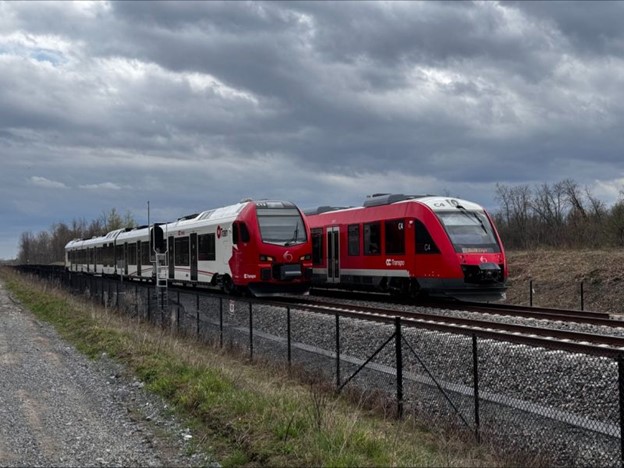
Preparing for Trial Running
The following steps are required before advancing to trial running:
- Systemwide testing and performance
- All trains, infrastructure, and systems are tested and need to consistently work together.
- Training
- Training of Diesel Rail Operators and Diesel Rail Controllers is completed.
- TransitNEXT, responsible for the construction and the maintenance of the system, is fully mobilized and ready.
- Construction
- Final electrical, mechanical, safety, and communication systems are completed and station occupancy permits are received.
- All stations are substantially complete with only minor work remaining.
- Practice running
- Testing is increased to match what future service will be, OC Transpo staff and TransitNEXT teams are ready to run the system and prepared for any situations that may arise during operations, and all the technical systems and equipment are in good working order.
Trial Running
The trial running phase involves two stages. The first stage of the minimum 21-day period involves simulating passenger service. This stage includes evaluating the system’s on-time performance and TransitNEXT’s ability to respond to any reliability events during this period. On-time performance is a measurement that compares train arrival and departure times against what is scheduled. To graduate from this stage, the system will require a minimum on-time performance of 98.5 per cent over a 14-day rolling average.
The second stage of trial running involves seven days of failure scenario management. This stage includes testing various scenarios that may be encountered while operating the system such as medical incidents, service disruptions, and other emergency drills.
Ensuring the safety of passengers is a top priority. Trial running allows operators to identify and address safety concerns or operational issues before the system is open to the public.
An independent third-party System Integration Verifier will oversee trial running as it proceeds. Their role is to scrutinize the integration activities to ensure the project team is following industry best practices and to fast track the resolution of any disputes.
Substantial Completion
Substantial completion is the final step before the system is handed over to the City of Ottawa. This is achieved once all the infrastructure elements have been completed, including regulatory approvals, safety and security certifications, and the successful completion of trial running.
An Independent Certifier will certify that the contract requirements outlined in the project agreement have been met. The Independent Certifier is a third party that will work with the City and TransitNEXT to ensure all requirements are met and any deficiencies are captured. For example, landscaping may not be required for the safe and reliable operation of the system and can be completed once the system is operating.
In addition, an Independent Safety Auditor will confirm that the safety requirements have been met and that the system is ready and safe for service.
Recommendations and lessons learned from the Ottawa LRT Public Inquiry(link is external), and multiple third-party reviews have been incorporated into this process to ensure the system meets the expectations of customers.
Once all the contractual requirements, safety approvals, and regulatory approvals are achieved, the City will be in a position to provide an opening date to the Light Rail Sub-Committee.